Atlas o libro de los segundos. Enciclopedia del tiempo y del collage. Tomo I.
Programa Distrital de Estímulos 2019
Beca para proyectos editoriales independientes
45 Salón Nacional de Artistas, El Revés de la Trama, categoría Libros del Revés
Bogotá
Jardín Publicaciones
Ver también: El tesoro del saber: Atlas o libro de los segundos – Alma Sarmiento
Esta edición es una selección de un libro más extenso que se inició hacia el año 2013 y que funcionó como el revés y el complemento de mi tesis de doctorado en artes, que propone darle una vuelta al tiempo a través del collage, desde una polifonía de saberes.
En las aceleradas sociedades occidentales contemporáneas el tiempo es como un animal en vía de extinción. No hay tiempo ni para pensar en el tiempo. Las metáforas son elocuentes. Se habla de escasez o incluso de hambruna de tiempo, como si se tratara de un recurso vital, de una materia prima o de una fuente de energía no renovable. Aquellos que poseen ese recurso están salvados; los otros, condenados a naufragar en los torbellinos de la globalización y sus productos derivados (Internet, los transportes rápidos, la política neocapitalista…). No faltan las voces de protesta, y las críticas hacia la «civilización del reloj» proliferan.
Este libro-atlas-enciclopedia es el prototipo de una máquina para explorar el tiempo, desfamiliarizarnos de él, desfuturizar nuestras angustias y reinventar el porvenir.
Inventar una nueva relación con el tiempo supone reinventarlo todo. Como dice Giorgio Agamben en su libro Infancia e historia, toda cultura es antes que nada una experiencia del tiempo específica, y no existe una cultura nueva sin una transformación de esta experiencia. Del mismo modo, el primer objetivo de una verdadera revolución no consiste pura y simplemente en «cambiar el mundo», sino también, y sobre todo, en «cambiar el tiempo».
El collage —técnica y personaje principal de este proyecto— tiene la particularidad de permitir la coexistencia de temporalidades heterogéneas en un mismo tiempo y espacio. Le enseña al tiempo a desaprenderse y a desprenderse de los conceptos de continuidad, linealidad y homogeneidad que se le atribuyen generalmente. El collage crea así una sintaxis creativa de la discontinuidad. Estamos ante un lenguaje agramatical, la lengua de un pueblo anónimo que permite decir con imágenes lo que sería censurado en palabras. Permite también visualizar lo que simplemente no se puede decir o no se sabe decir, o más bien, permite visualizar aquello para lo que aún no se han inventado las palabras adecuadas. Máquina para ver y pensar, el collage lanza una tormenta de truenos sobre la arquitectura temporal que nos rodea.
De las múltiples acepciones de la palabra atlas (el titán griego que sostiene la bóveda celeste), este libro-atlas-enciclopedia alude al manual de planchas móviles que representan mapas o contienen imágenes. También se inspira en el trabajo de Aby Warburg, psico-historiador y psico-collagista de la cultura occidental, creador del famoso Atlas Mnemosyne (1927-1929), cuyos principios movedizos nos enseñan, de manera inagotable, nuevas relaciones entre las imágenes y las palabras.
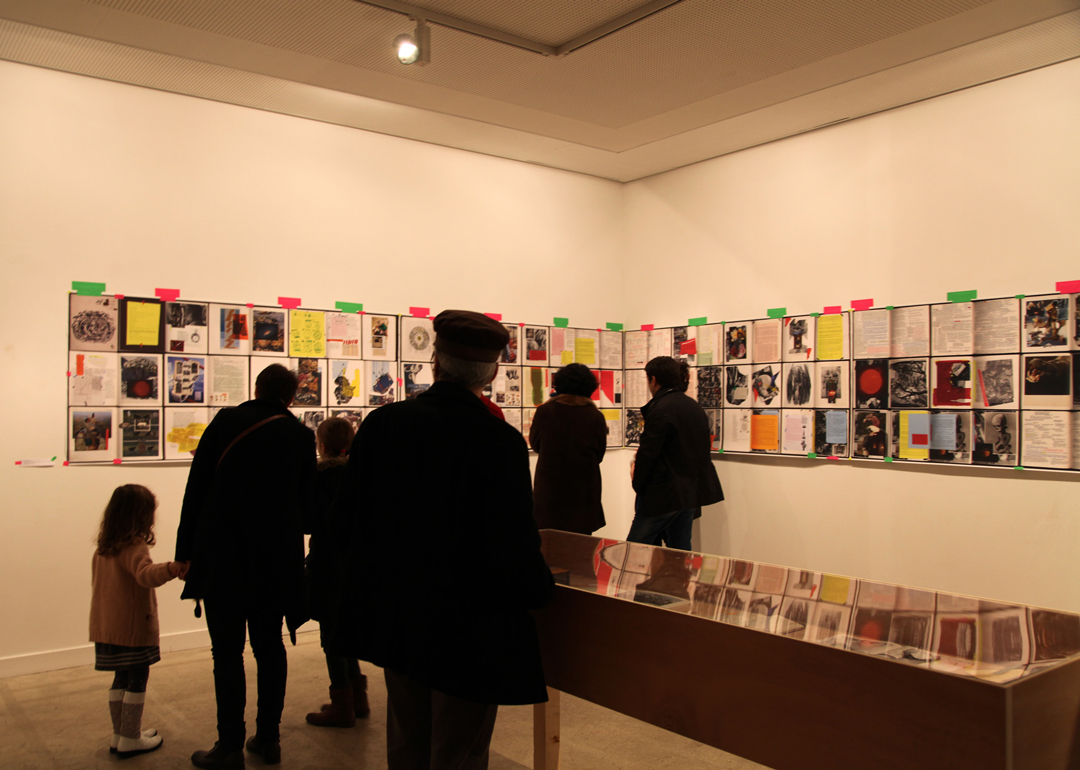
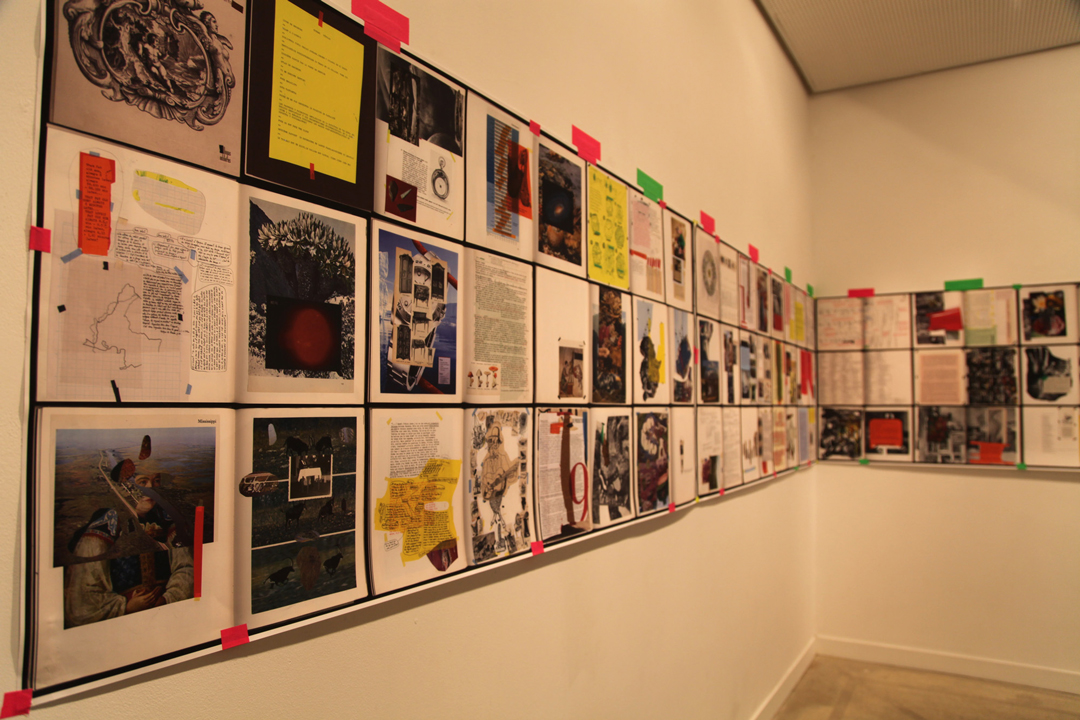
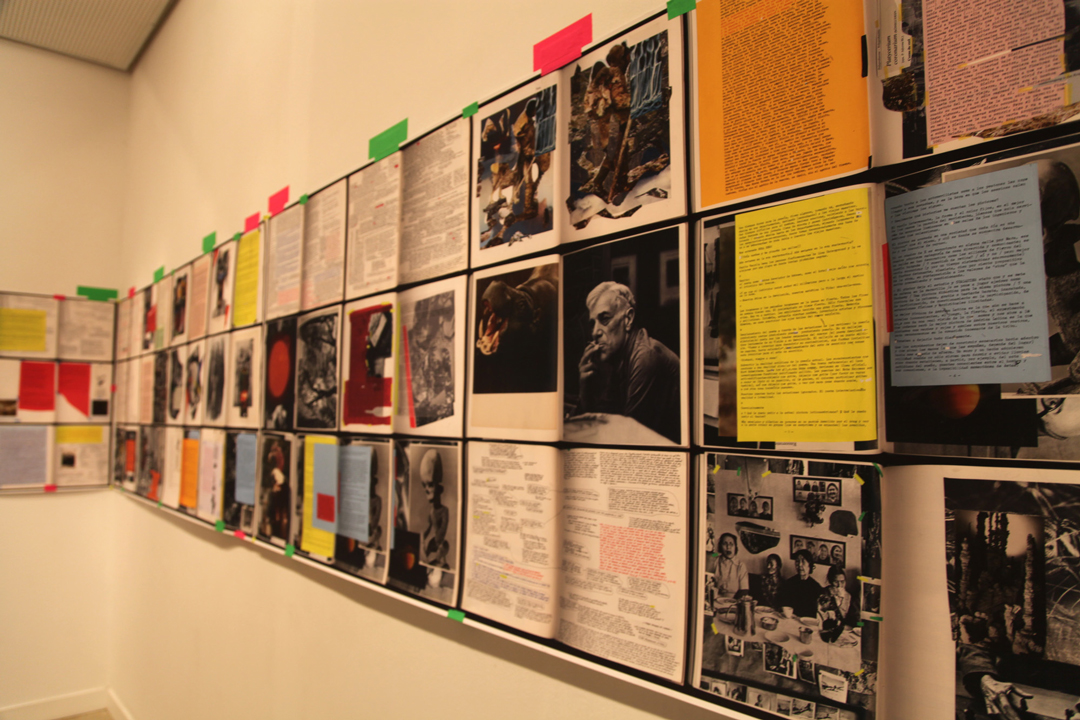
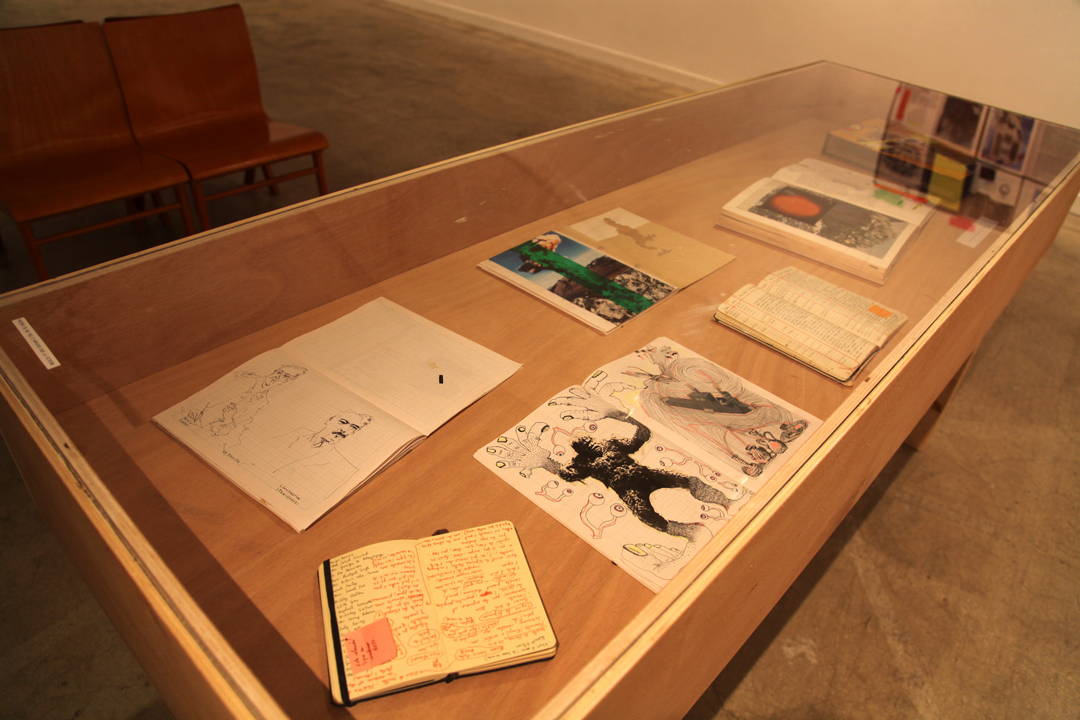
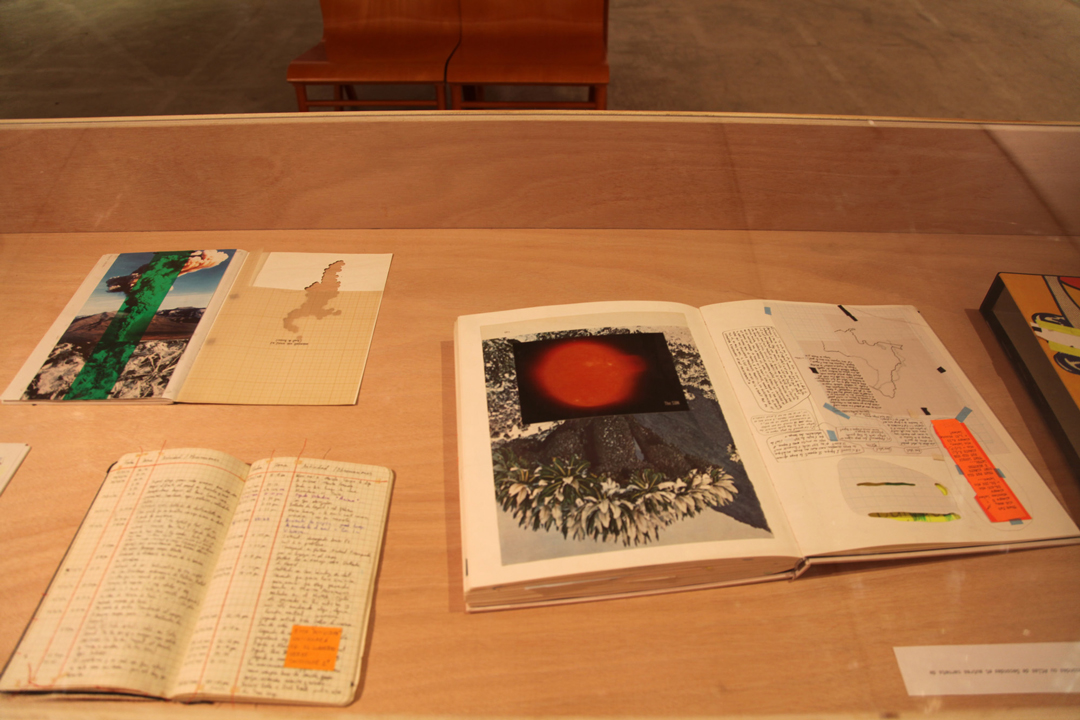
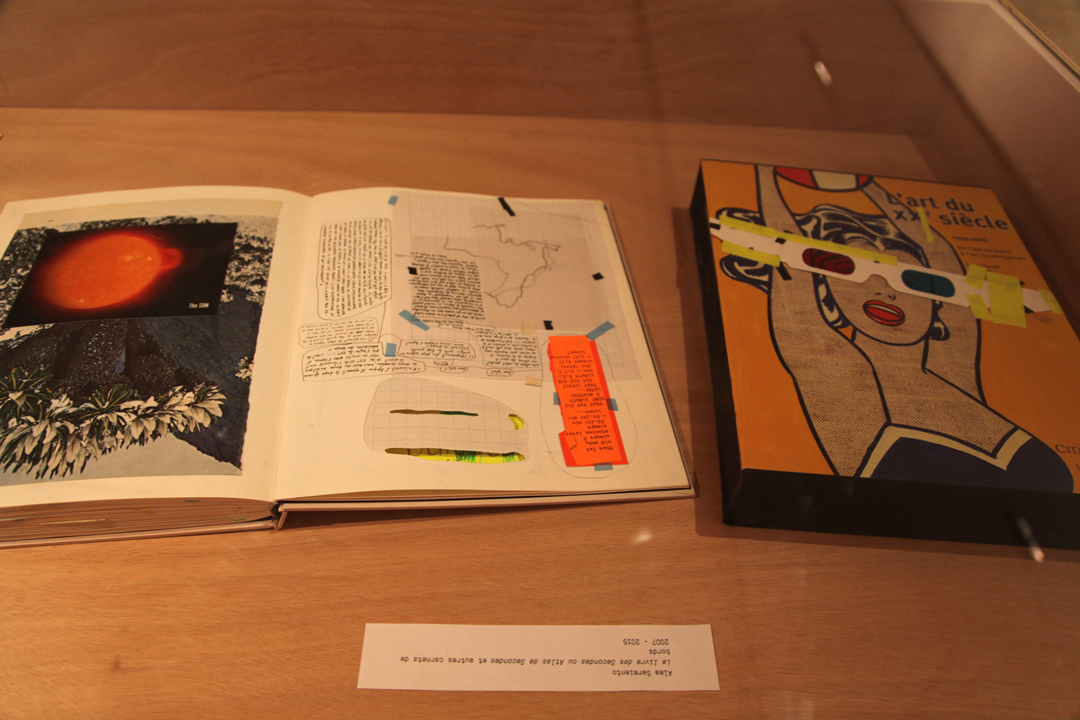
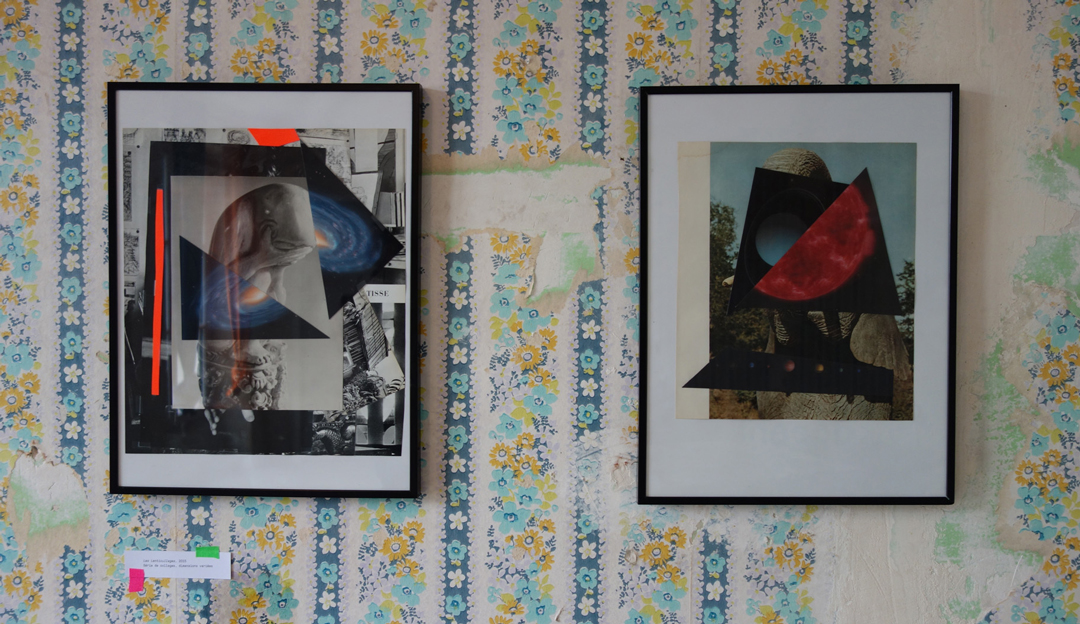
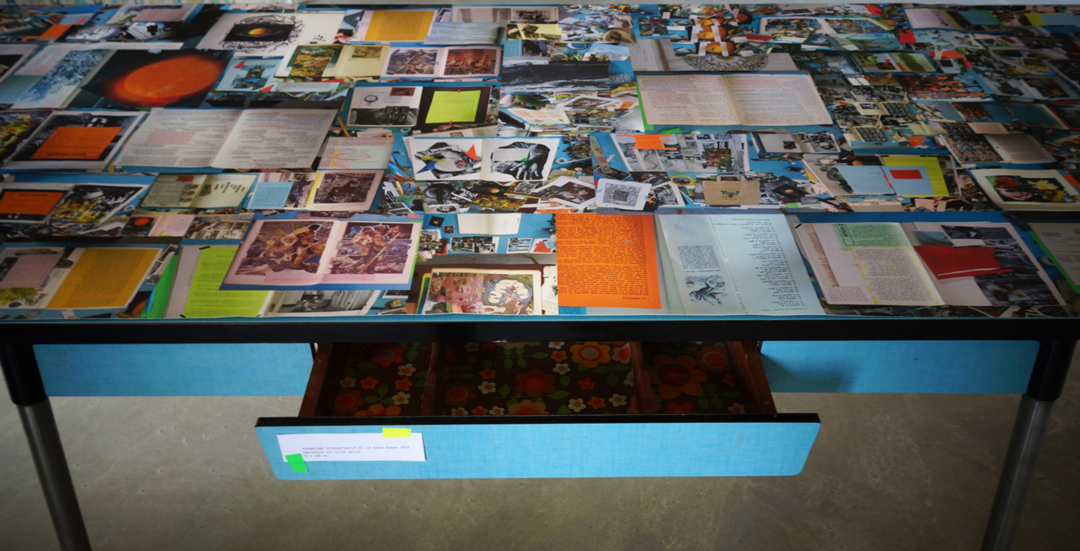
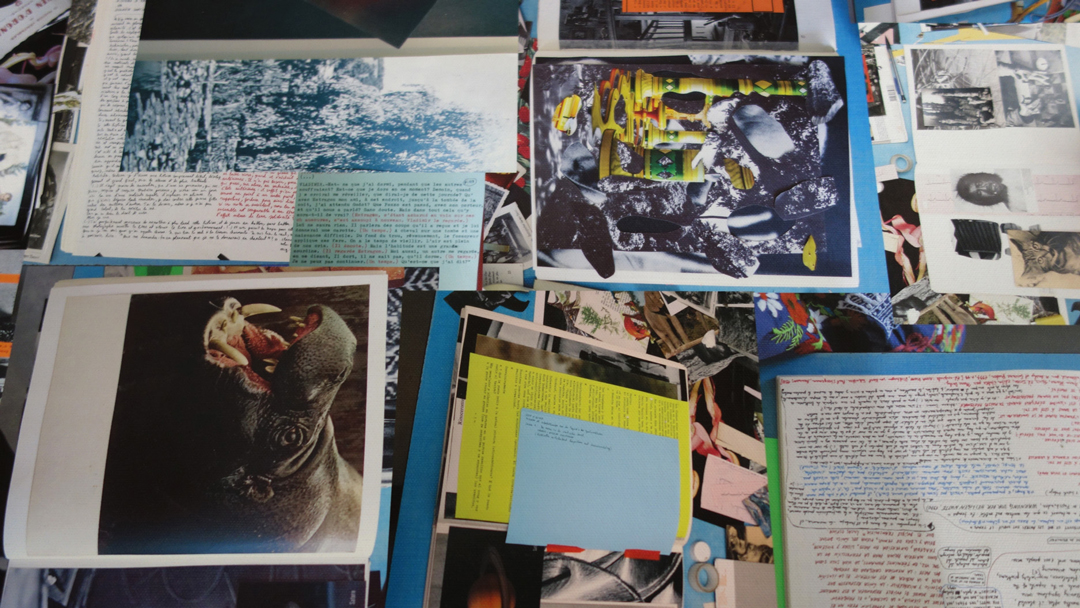
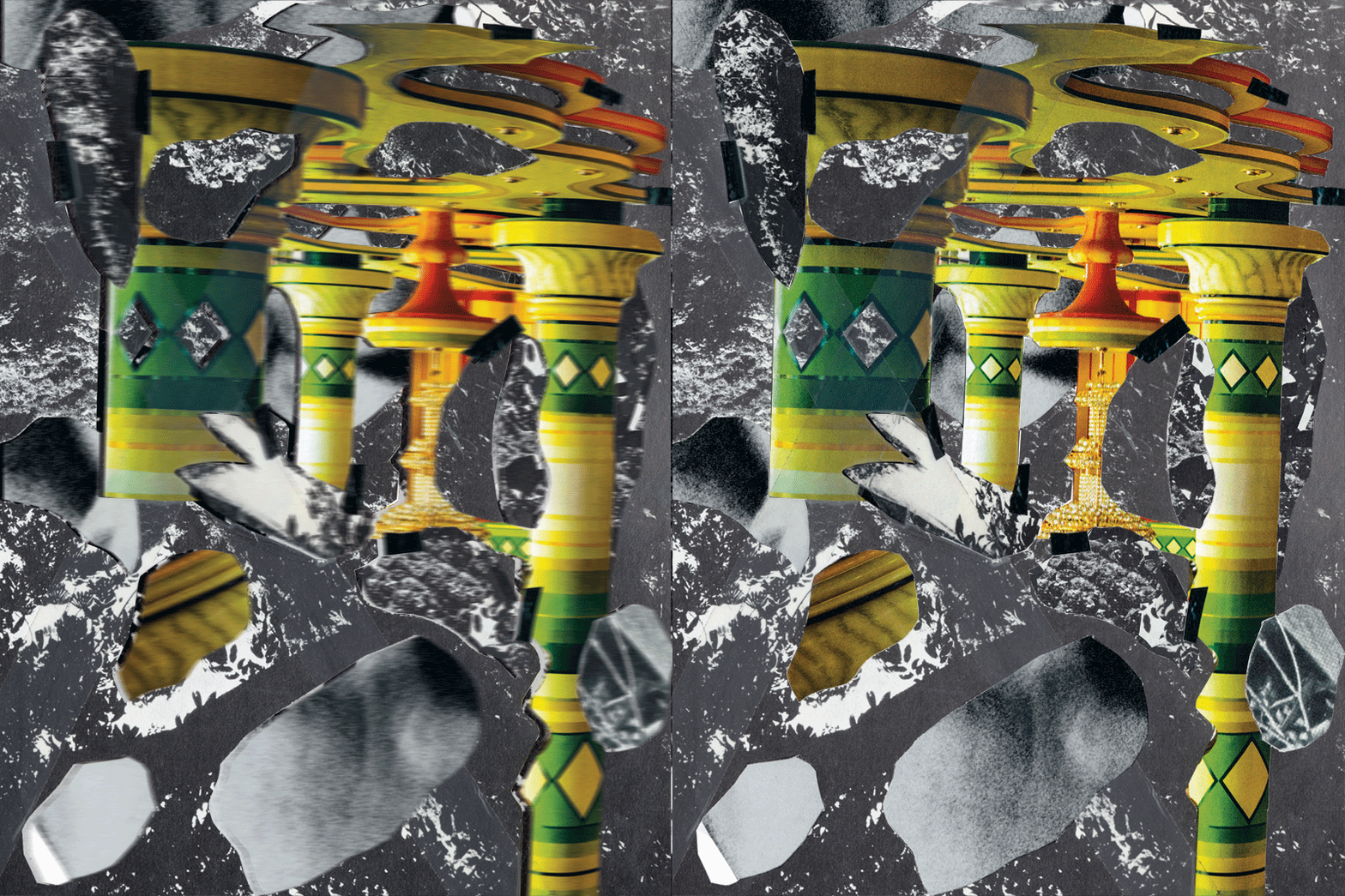
Las planchas de este Atlas de los segundos son móviles y no tienen un orden predeterminado. No hay un índice fijo: lectores y lectoras están invitadas a construir e inventar sus propias condiciones de lectura y a practicar así una forma de montaje o de edición. Los pedazos de cinta pegante visibles y de colores fuertes que ayudan a construir varios collages, aluden, en un sentido amplio, a esa posibilidad de editar el orden del libro y, más específicamente, a la antigua edición cinematográfica, que dependía totalmente de ellos para unir los pedazos del material en bruto que componían las películas. Asimismo, intentan poner en evidencia el proceso de realización de los collages y resaltar su capacidad para unir cosas que a priori no están unidas, para juntar entonces potencialmente todas las cosas en el tiempo.
Huelga general de la temporalidad.
¡Que viva el Carnaval del tiempo!
Atlas or Book of Seconds. Encyclopedia of Time and Collage. Volume I.
Programa Distrital de Estímulos 2019
Grant for Independent Editorial Projects
45th National Artists’ Salon, El Revés de la Trama, “Libros del Revés” category
Bogotá
Jardín Publicaciones.
Addditional info at: El tesoro del saber: Atlas o libro de los segundos – Alma Sarmiento
This edition is a selection from a larger book that began around 2013 and served as the reverse side and complement to my doctoral thesis in art, which proposes turning time upside down through collage, from a polyphony of knowledges.
In the accelerated societies of the contemporary West, time has become like an endangered species. There is no time—not even to think about time. The metaphors are eloquent: we speak of time scarcity, even time famine, as if it were a vital resource, a raw material, or a non-renewable source of energy. Those who possess it are saved; the others, condemned to drift in the whirlpools of globalization and its derivative products (the Internet, fast transportation, neoliberal politics…). Voices of protest are not lacking, and criticism of the “civilization of the clock” proliferates.
This book–atlas–encyclopedia is a prototype of a machine for exploring time, for defamiliarizing ourselves from it, for de-futuring our anxieties, and for reinventing the future.
Inventing a new relationship with time entails reinventing everything. As Giorgio Agamben writes in Infancy and History, every culture is, above all, a specific experience of time, and no new culture can exist without a transformation of that experience. Likewise, the first aim of a true revolution is not simply to “change the world,” but above all, to “change time.”
Collage—the main technique and protagonist of this project—has the unique ability to allow heterogeneous temporalities to coexist in the same space and moment. It teaches time to unlearn itself, to detach from the concepts of continuity, linearity, and homogeneity generally attributed to it. Collage thus creates a creative syntax of discontinuity. We are faced with an ungrammatical language, the tongue of an anonymous people, allowing us to say with images what would otherwise be censored in words. It also makes visible what cannot—or cannot yet—be said, or better yet, what still lacks the words to be spoken. As a machine for seeing and thinking, collage unleashes a thunderstorm upon the temporal architecture that surrounds us.
Of the many meanings of the word atlas (the Greek titan who holds up the celestial vault), this book–atlas–encyclopedia refers to the manual of movable plates that represent maps or contain images. It is also inspired by the work of Aby Warburg, psycho-historian and psycho-collagist of Western culture, creator of the famous Mnemosyne Atlas (1927–1929), whose ever-shifting principles teach us, endlessly, new relationships between images and words.
The plates in this Atlas of Seconds are movable and have no predetermined order. There is no fixed index: readers are invited to build and invent their own conditions of reading, and in doing so, to practice a form of montage or editing. The visible, brightly colored pieces of tape that hold several collages together allude, in a broad sense, to this possibility of editing the order of the book, and more specifically, to the early days of film editing, which relied entirely on such tape to join the raw fragments that made up a film. They also seek to make visible the process behind the collages and to highlight their power to bring together things that are not, at first sight, connected—to potentially join all things in time.
General Strike of Temporality.
Long live the Carnival of Time!
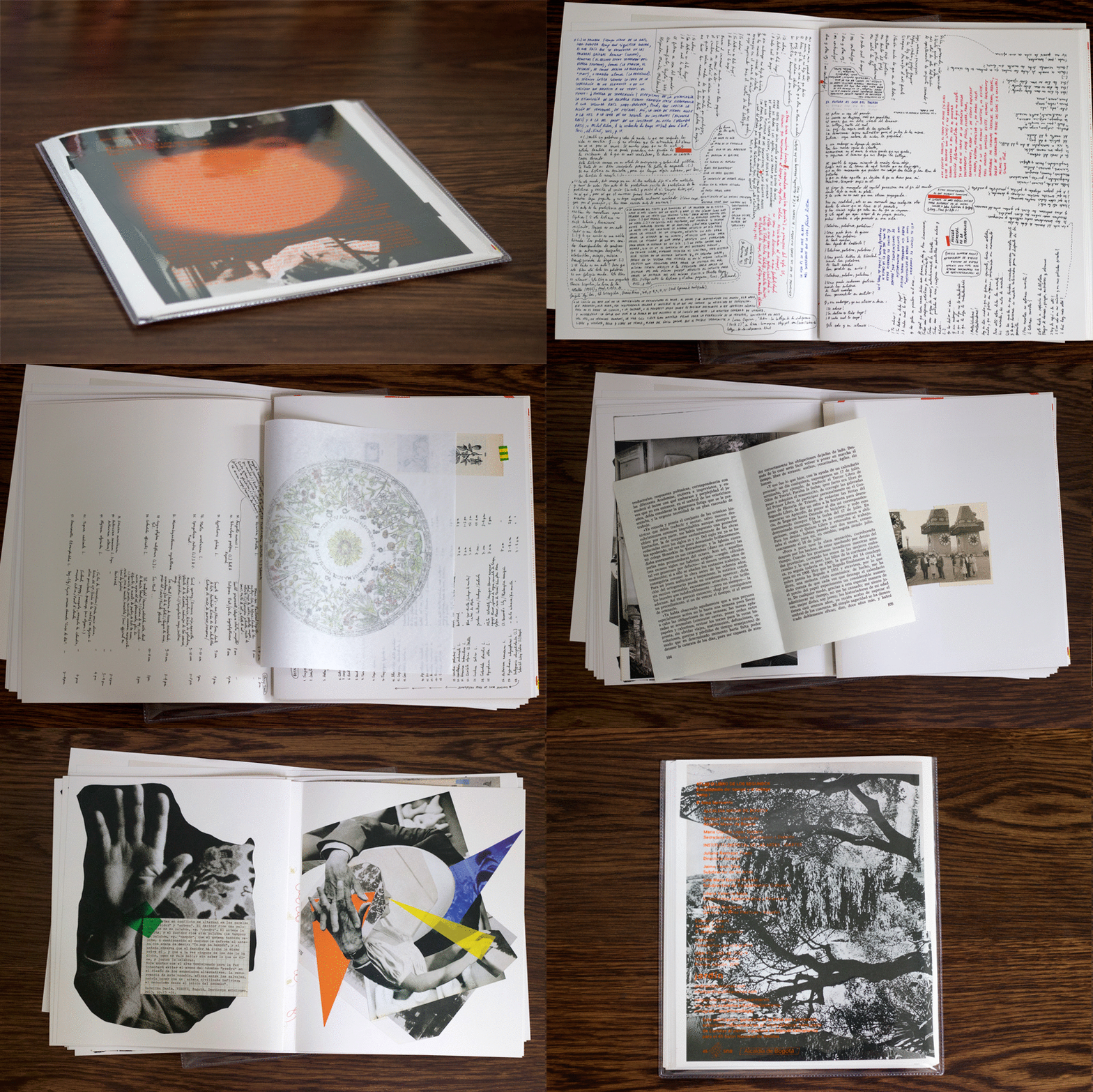
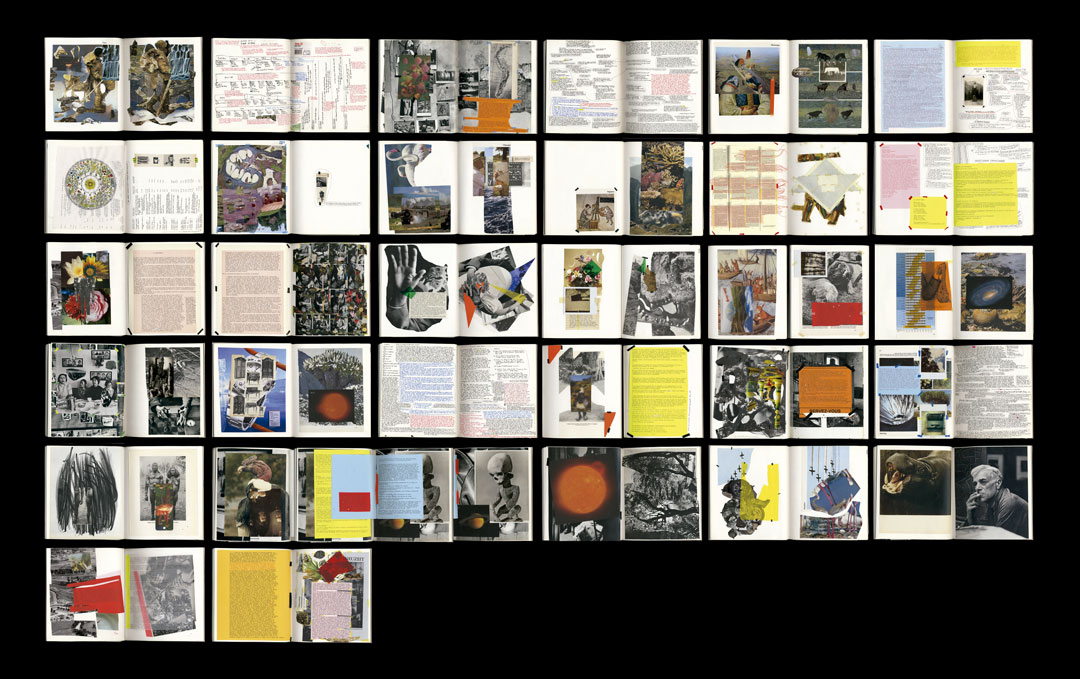
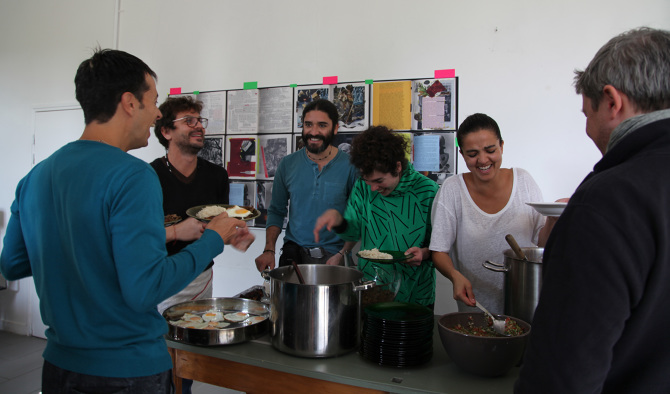
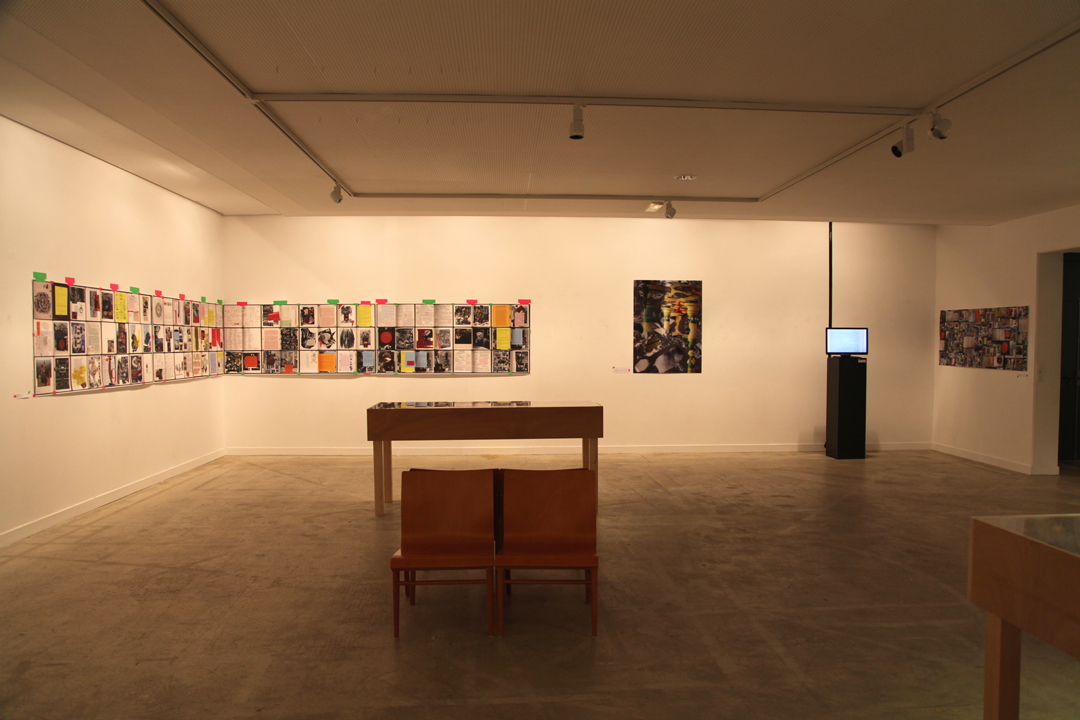
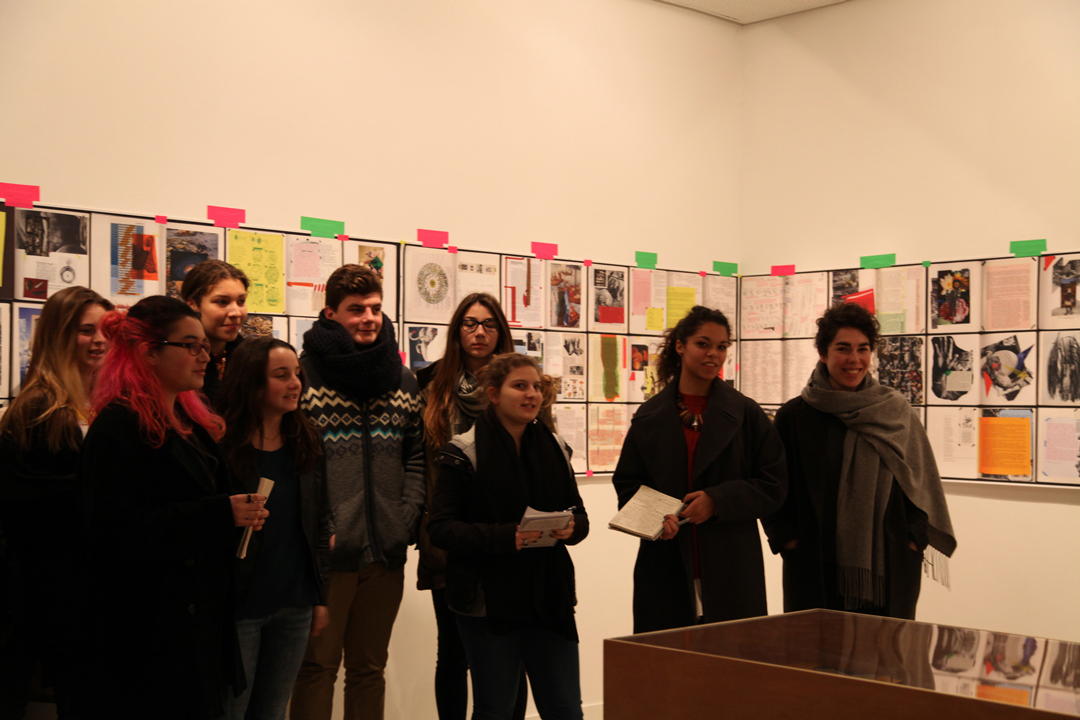
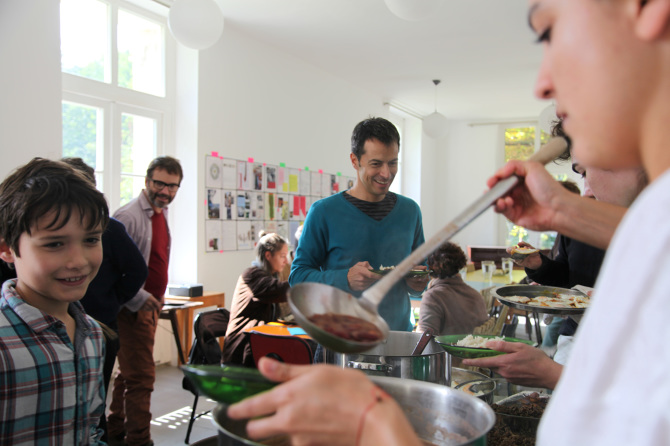
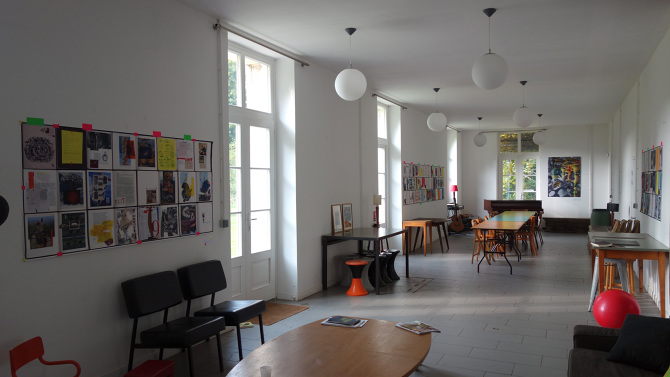
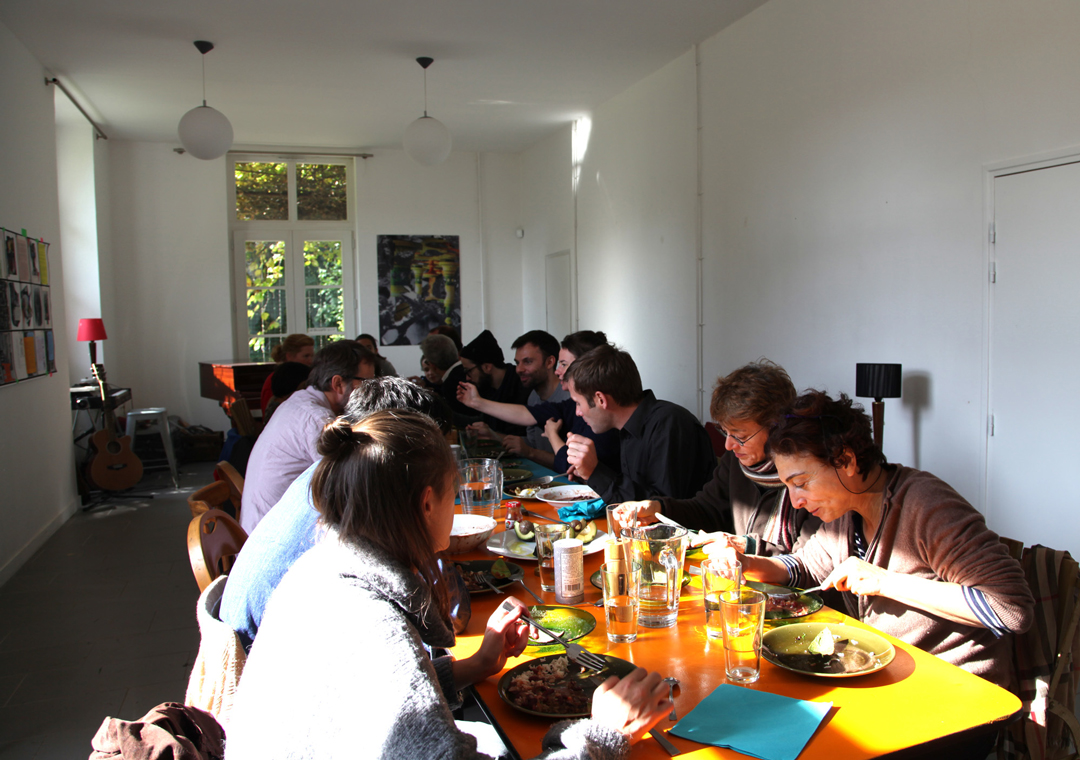
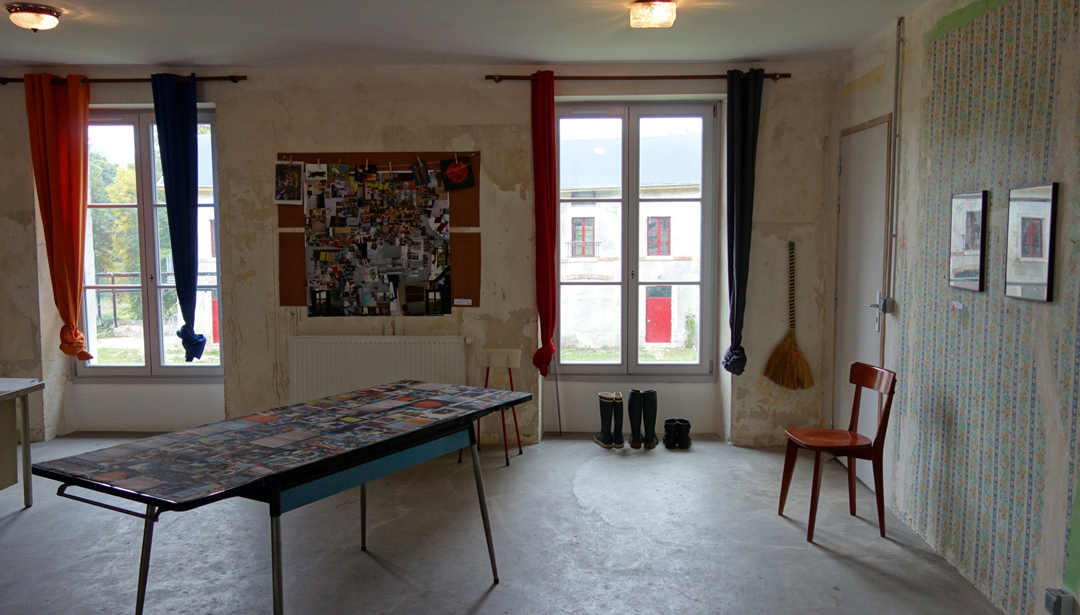
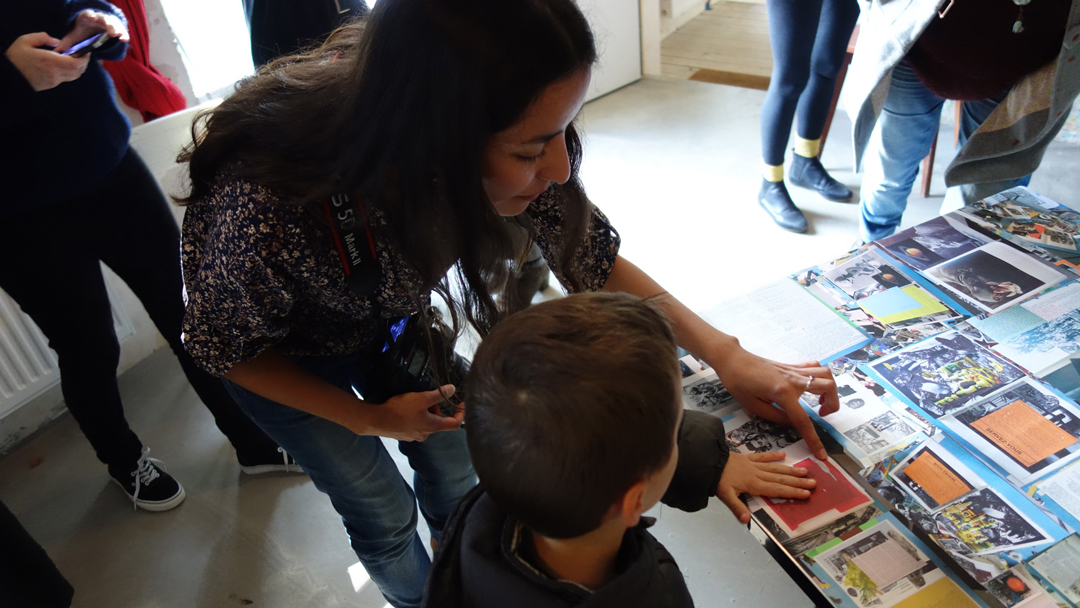
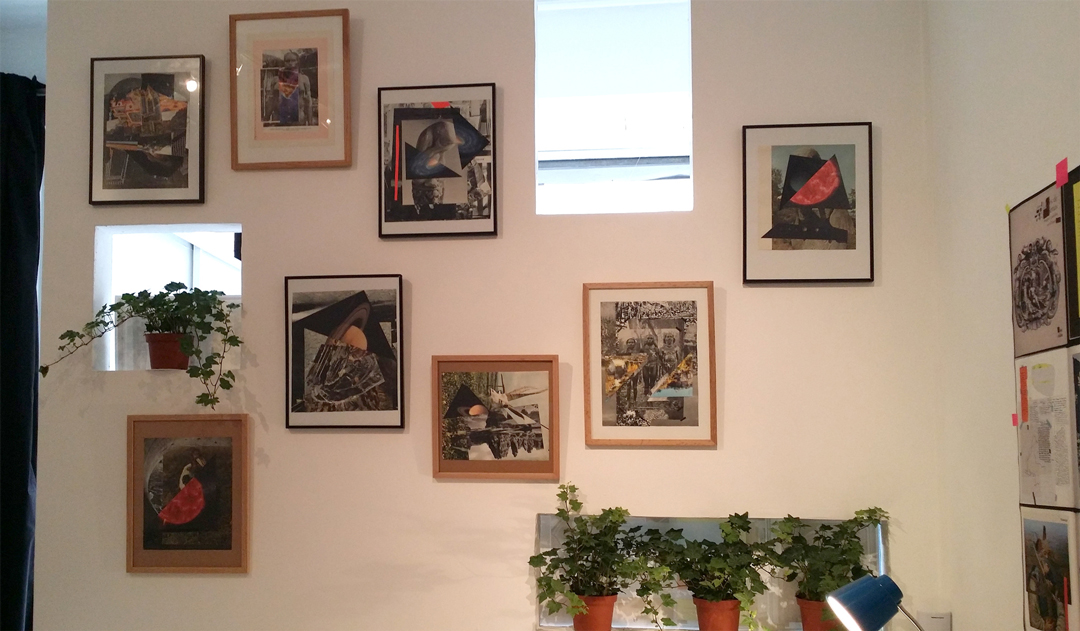
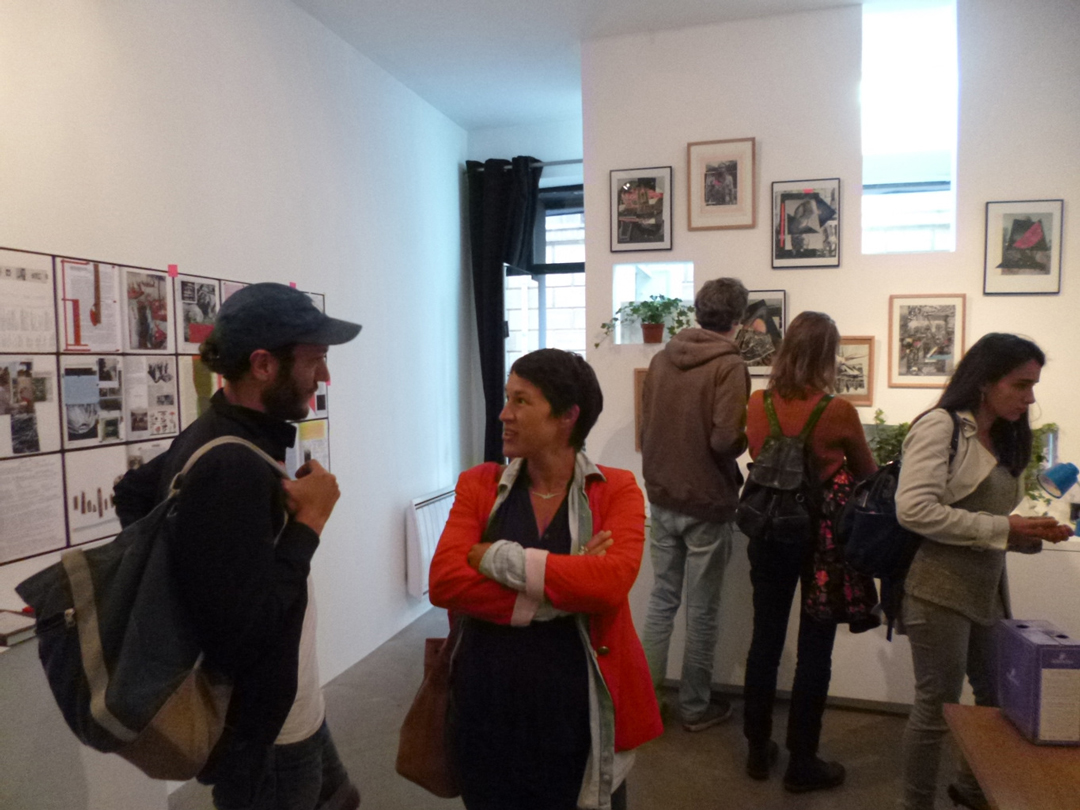
Exposición con una versión del Atlas junto a otros trabajo en Lizières, Centre de culture et de ressources en Épaux-Bézu, Francia (2015) en el marco de una residencia artística
Exhibition of a version of the Atlas and other works in relation to it at Lizières, Centre de culture et de ressources, in Épaux-Bézu, France (2015), within the frame of an artistic residency
Tributo al taller
Tribute to the studio
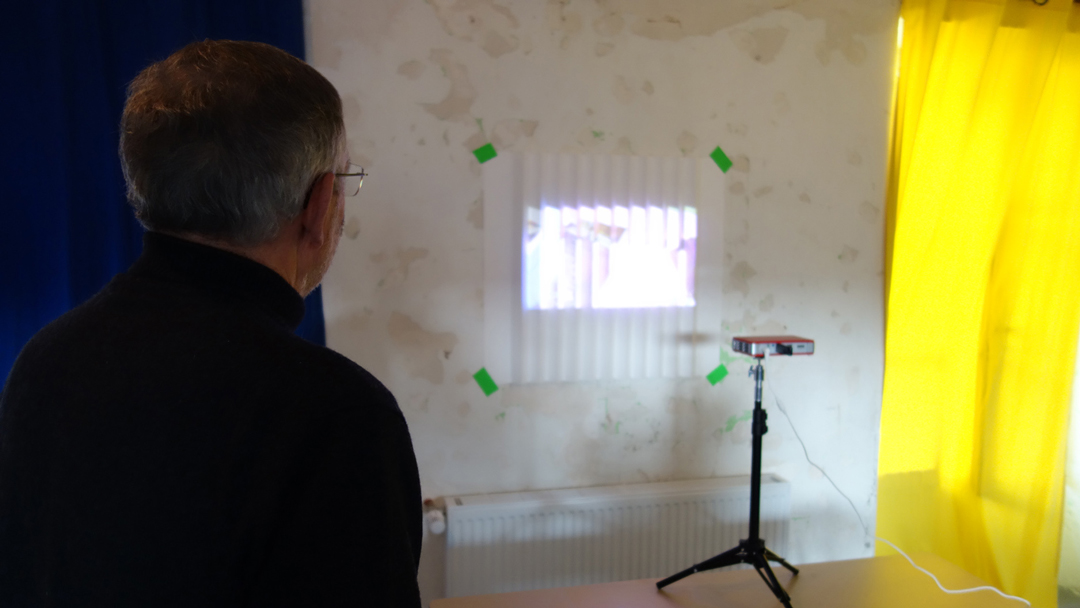
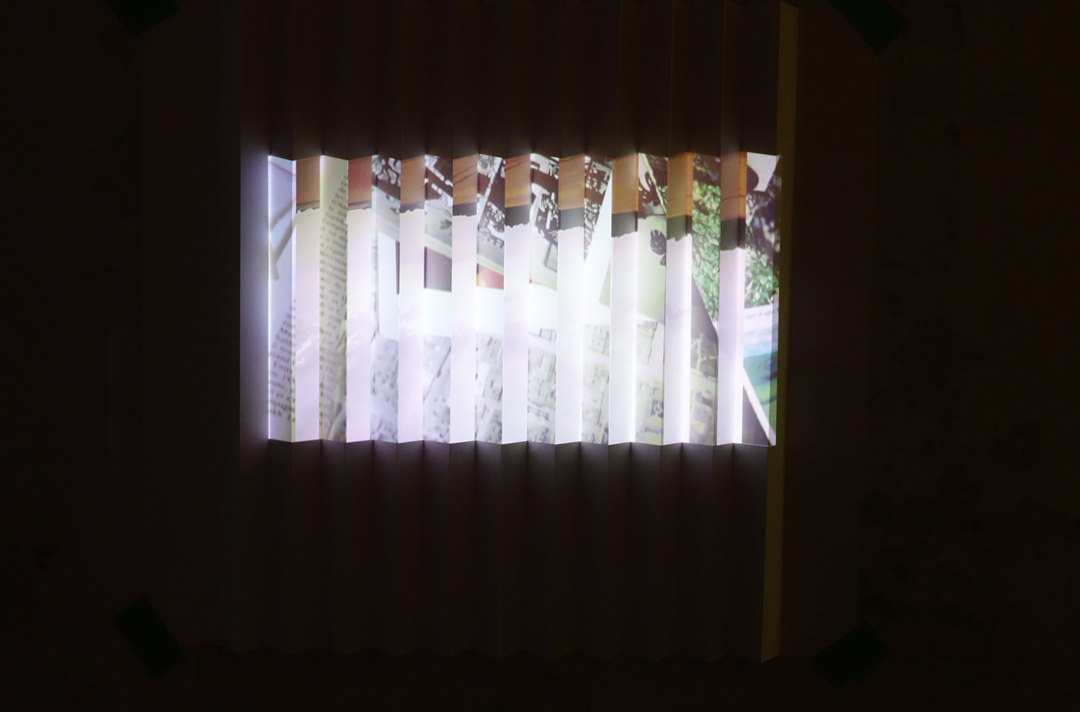
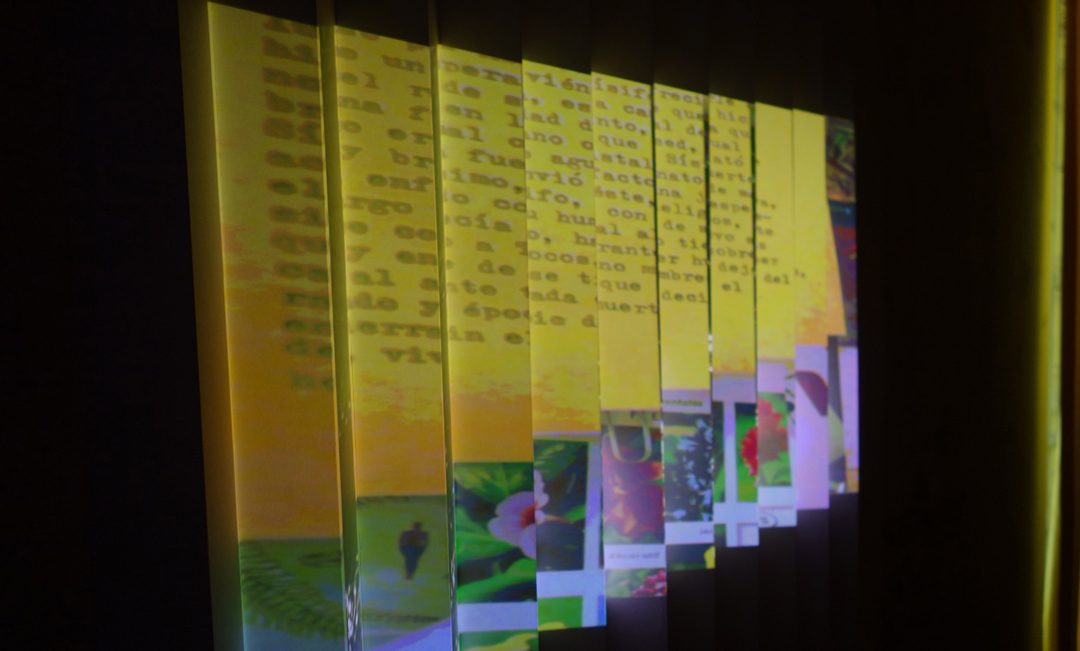
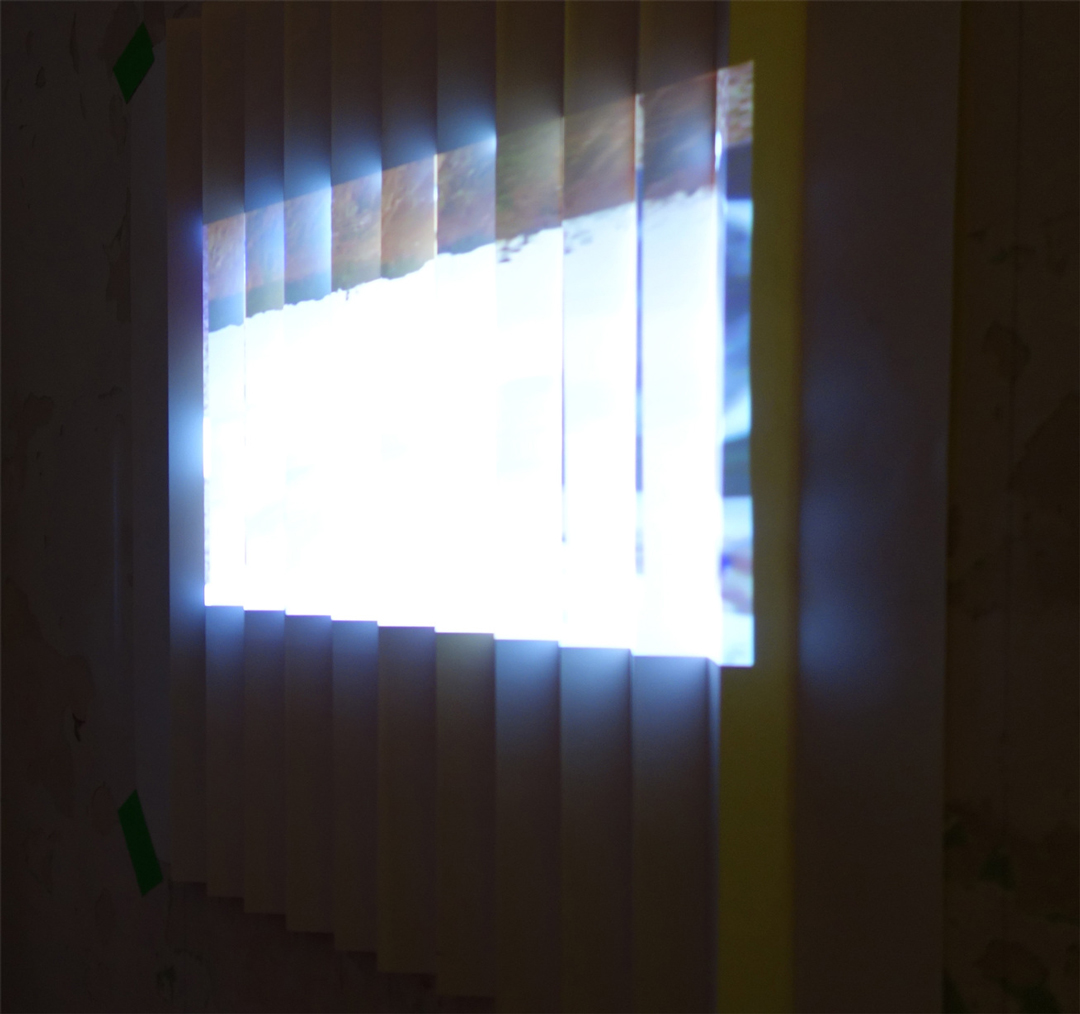
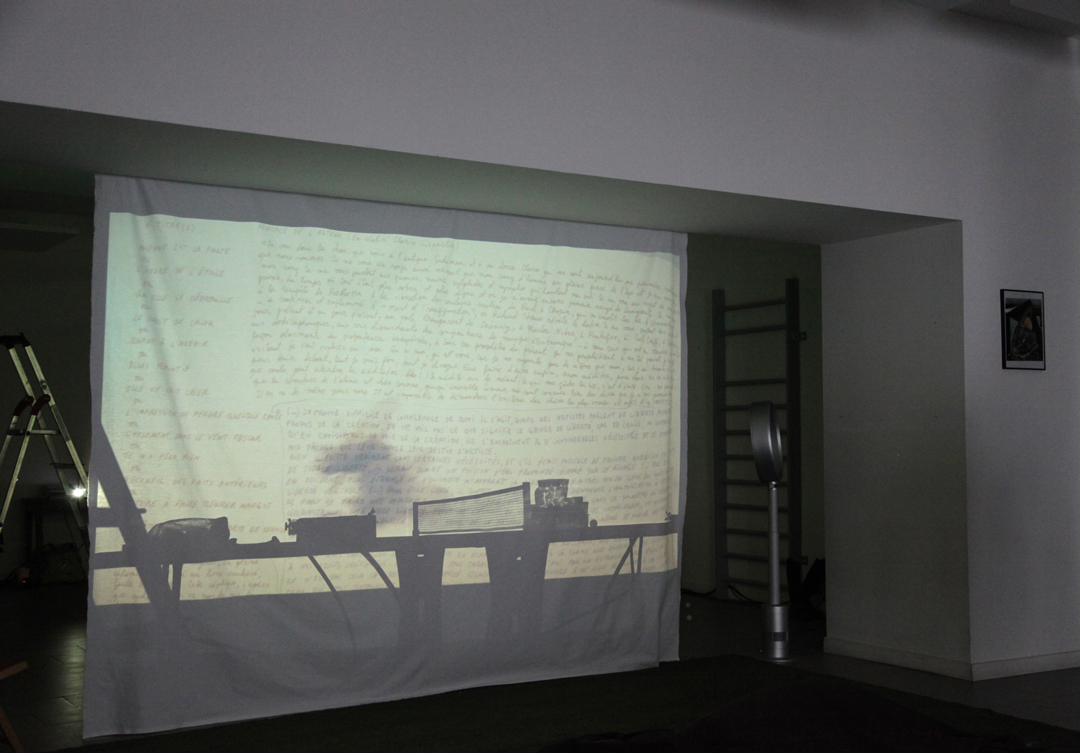
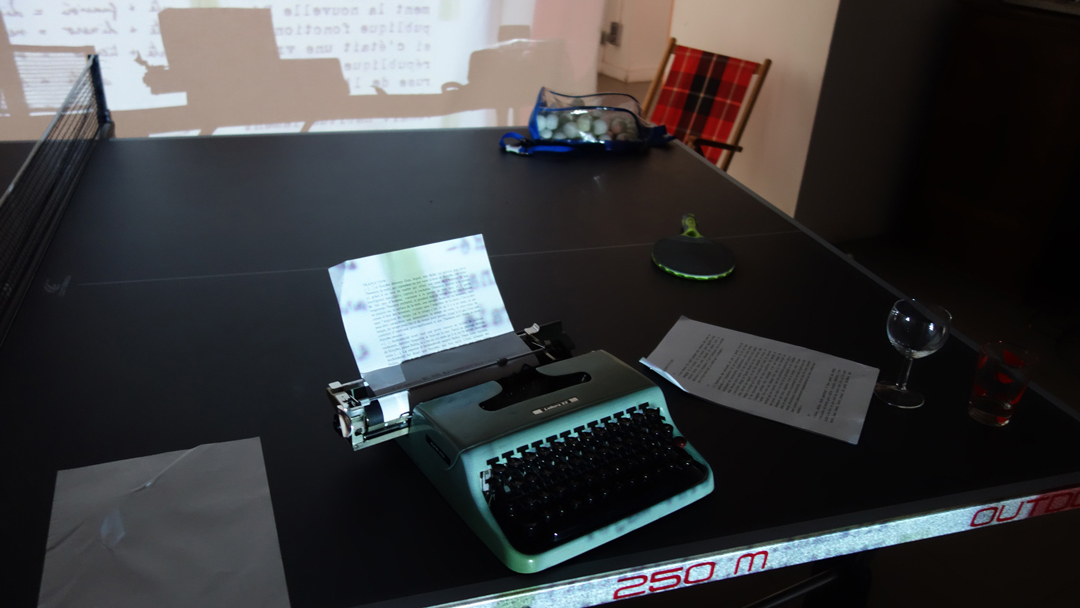
Performance con juego de sombras y video proyección
Shadow play performance and video-projection
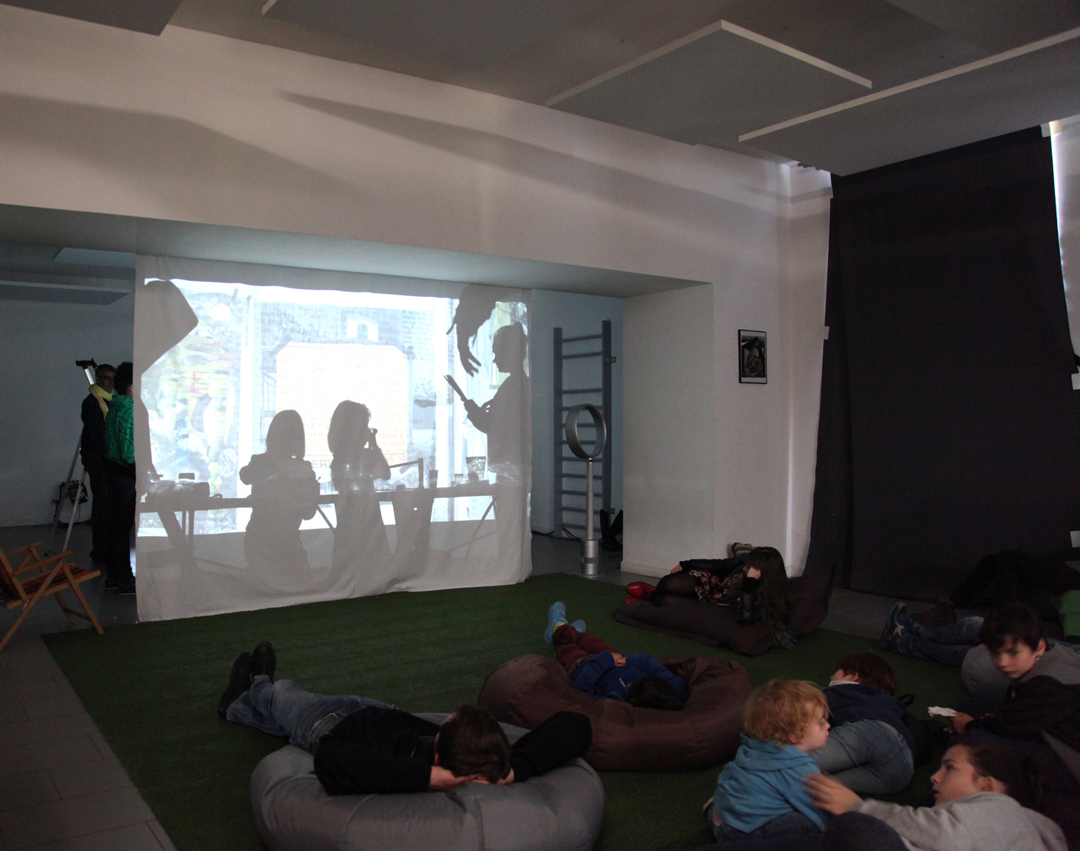
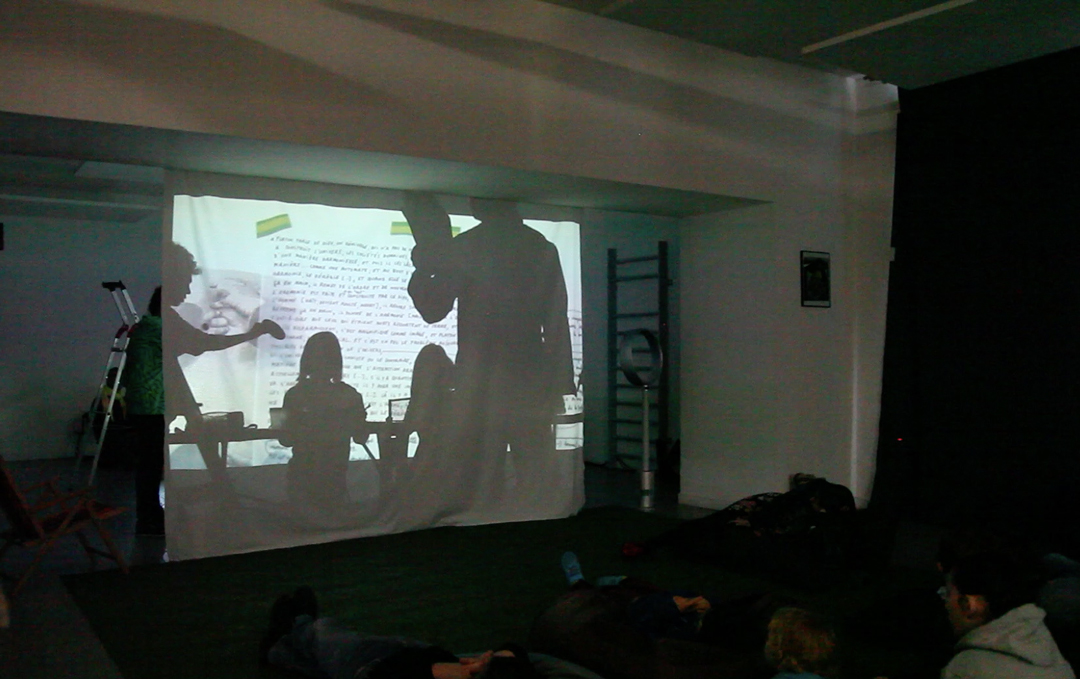
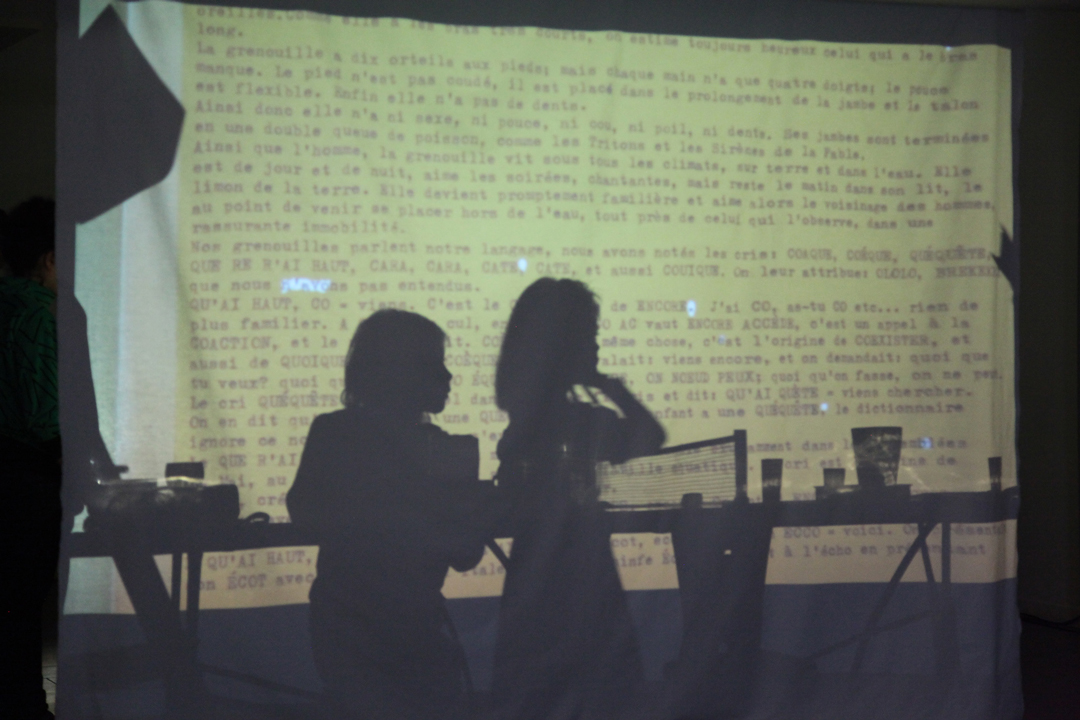
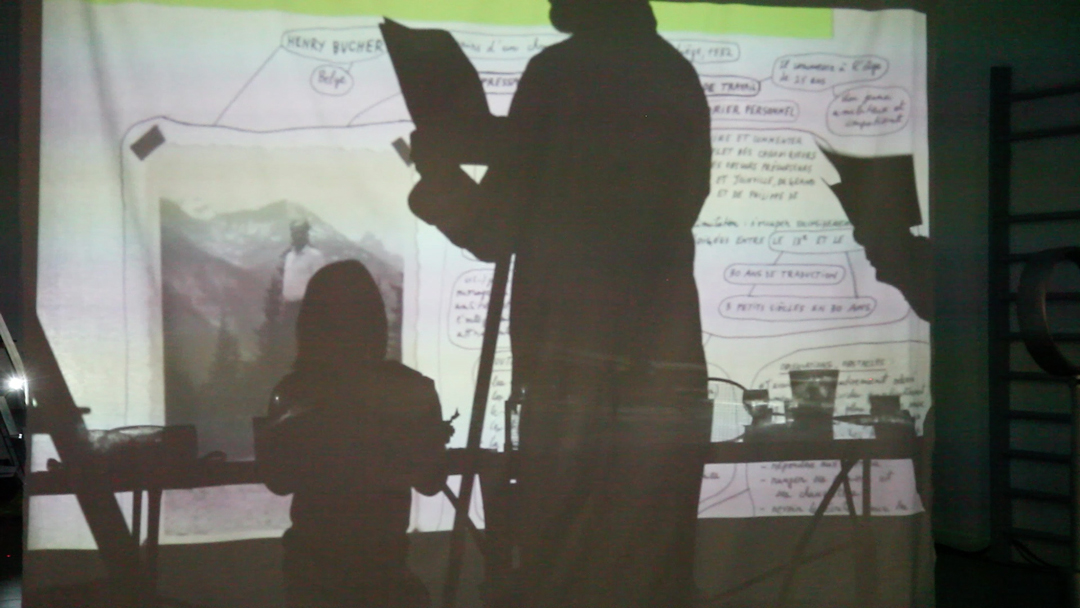
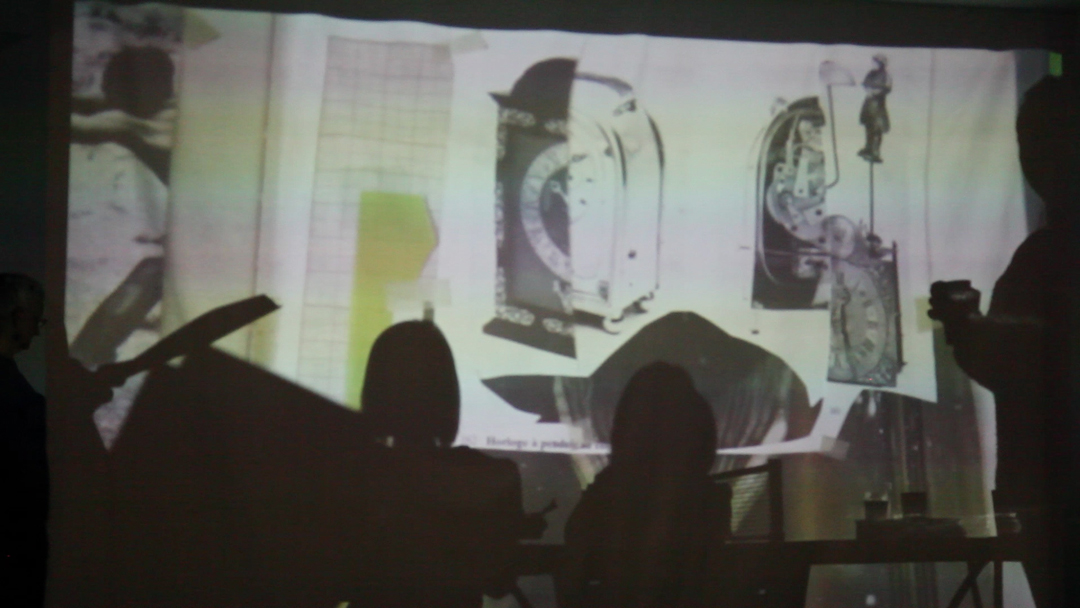
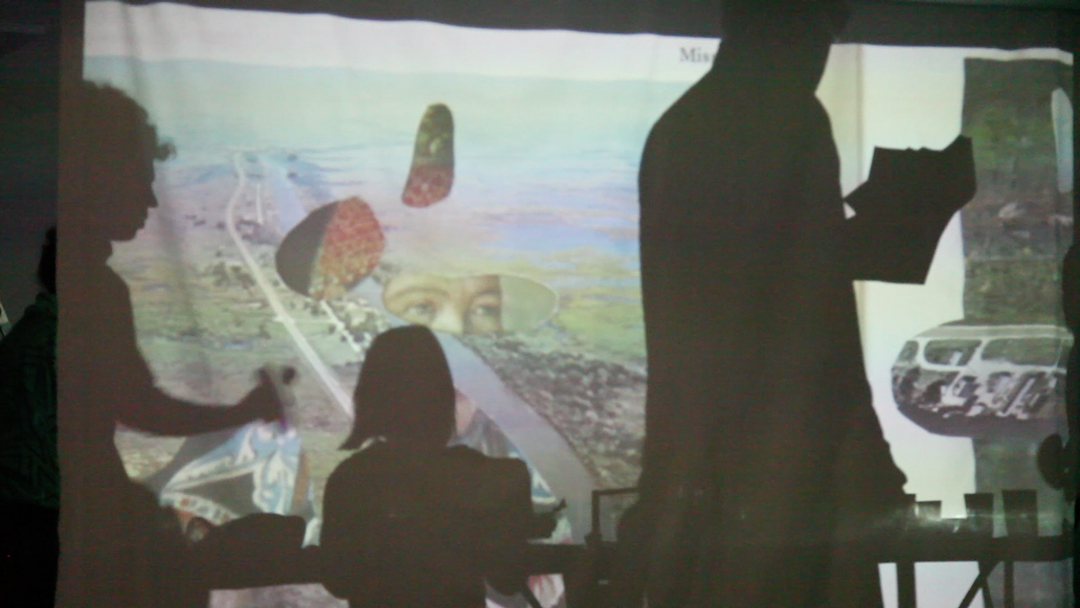
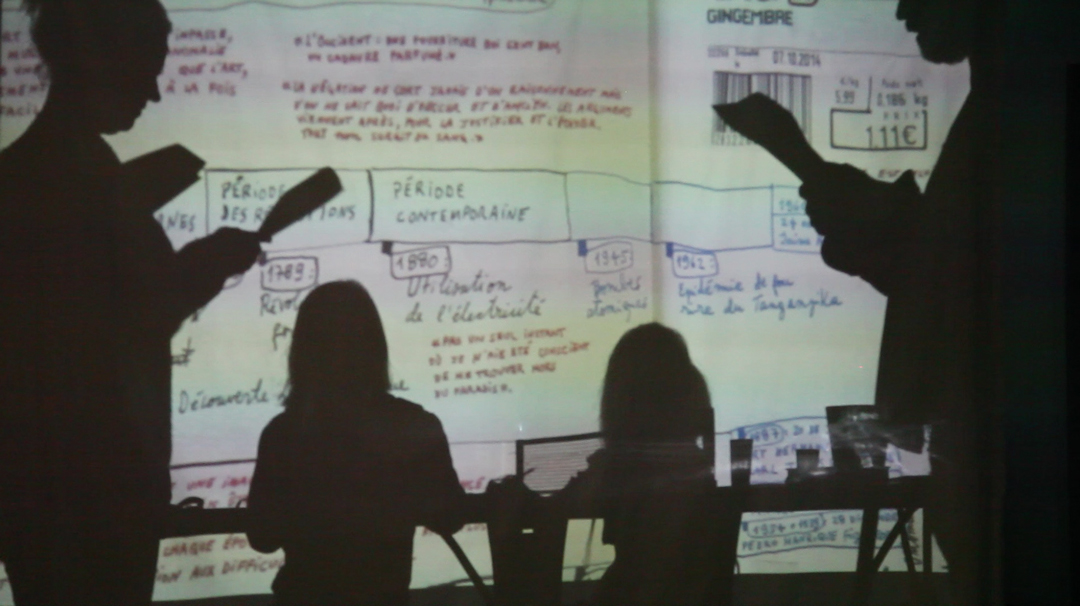
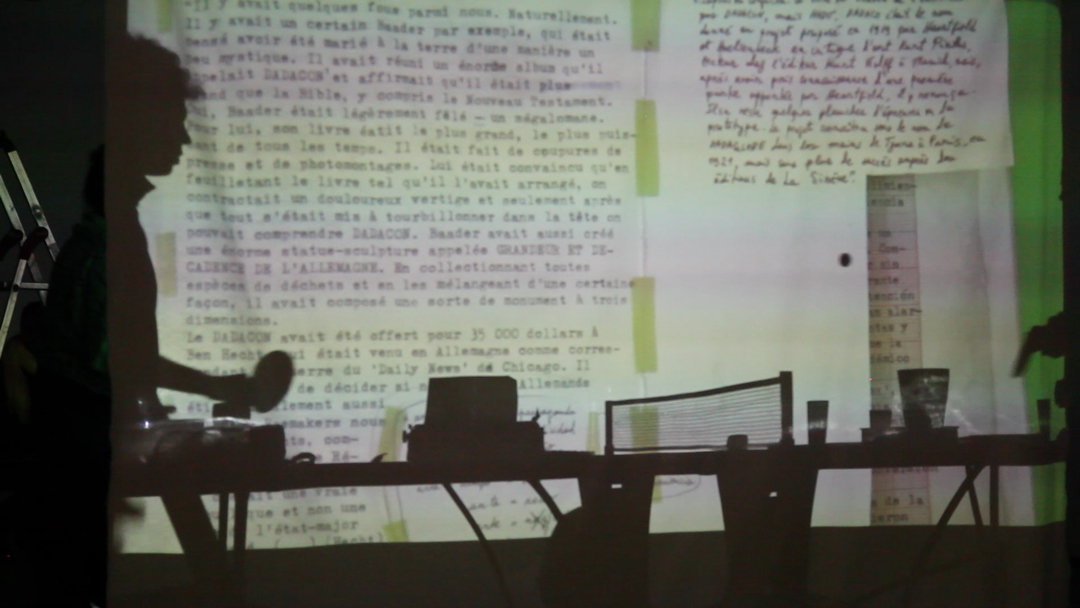
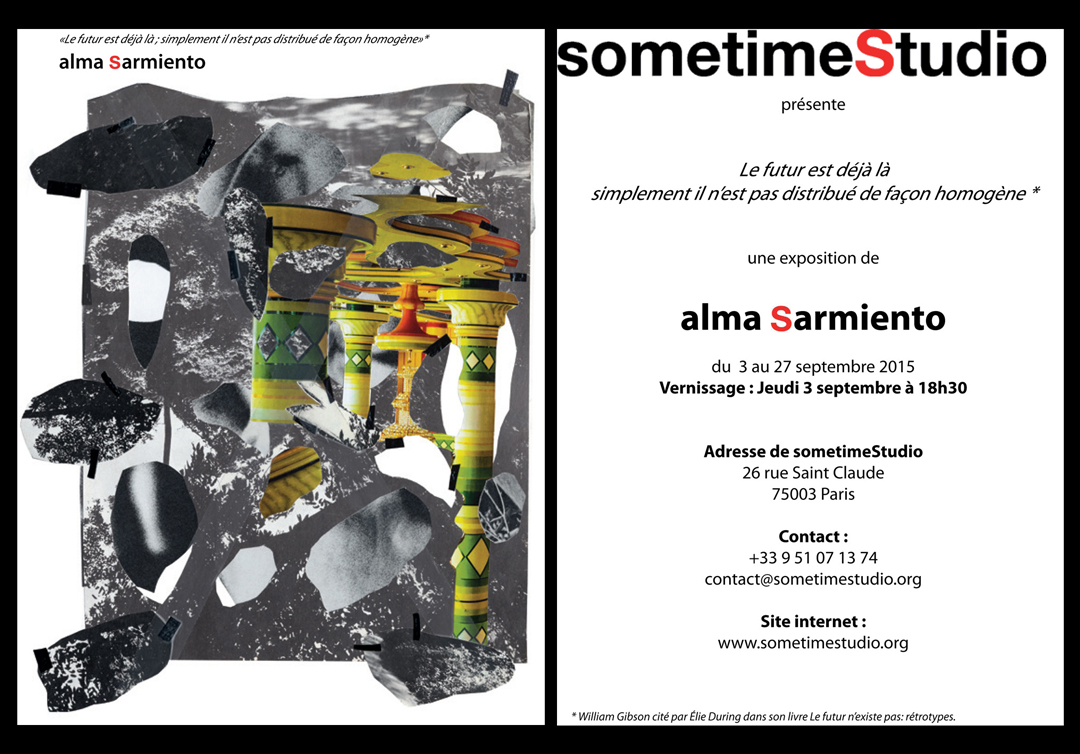
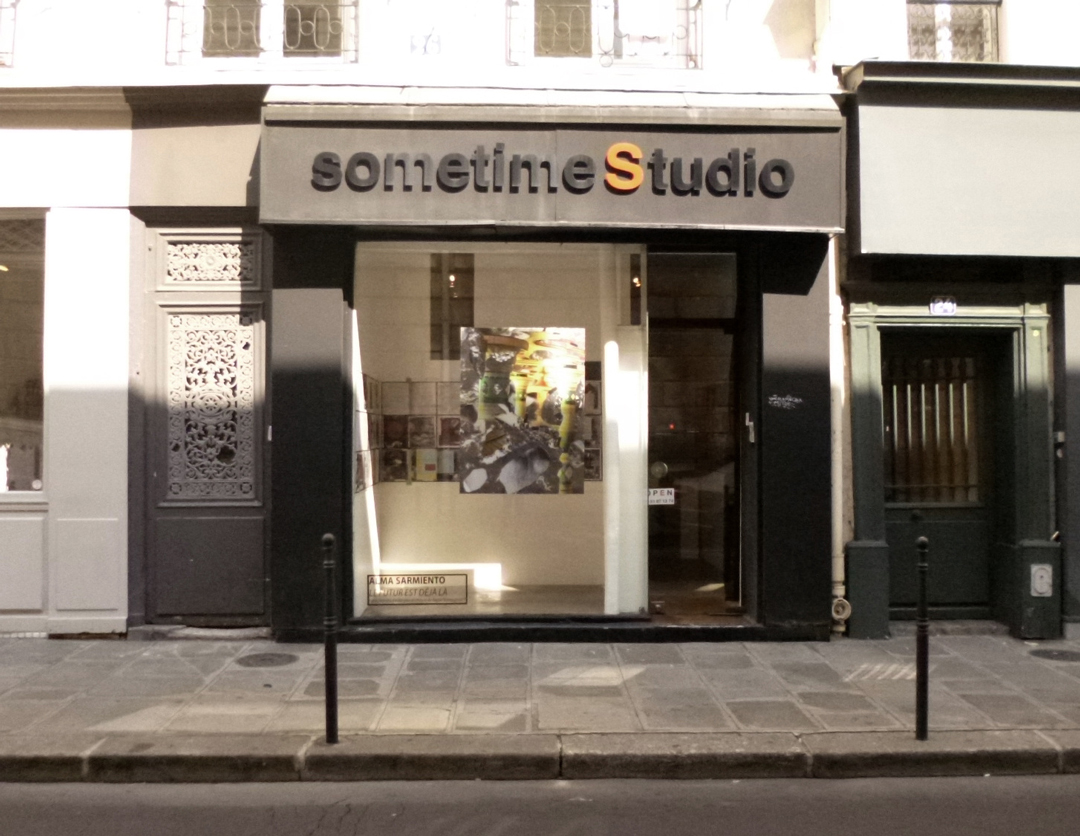
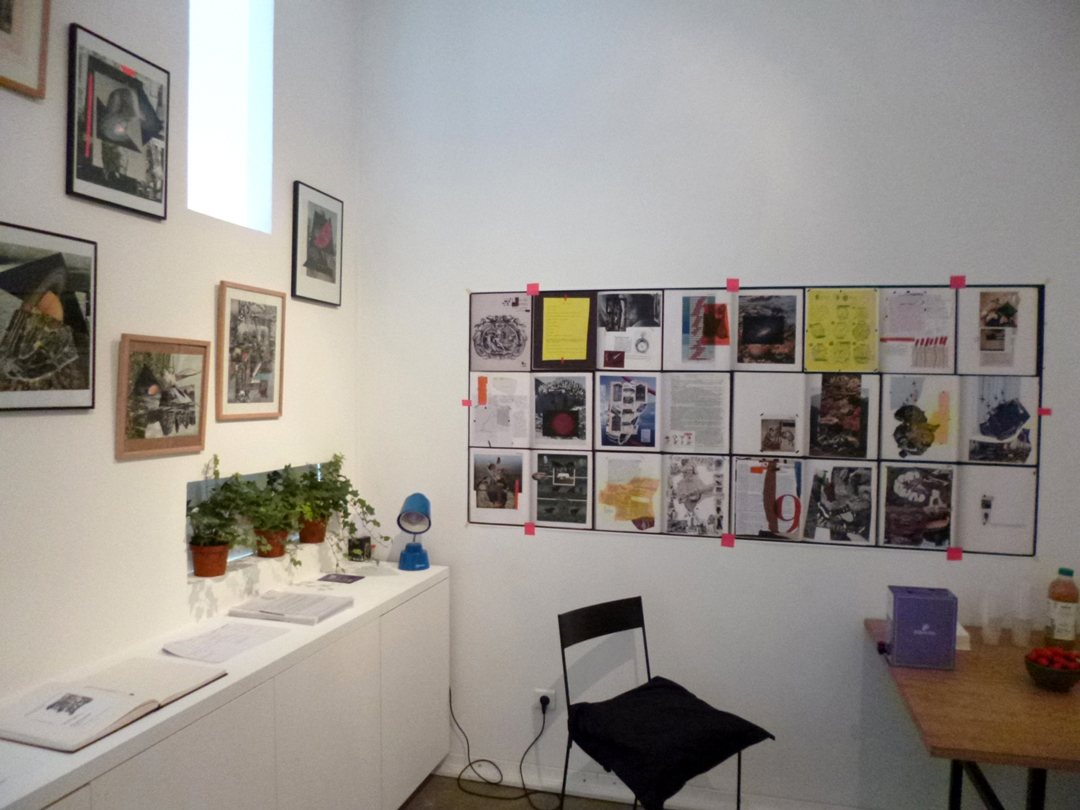
Exposición en SometimeStudio. galería de arte dirigida por el artista multidisciplinar Ramuntcho Matta. La galería estuvo ubicada en la 26 rue Saint-Claude de Paris hasta el 2021
Exhibition at SometimeStudio. an art gallery directed by multidisciplinary artist Ramuntcho Matta. The gallery was located at 26 rue Saint-Claude in Paris until 2021
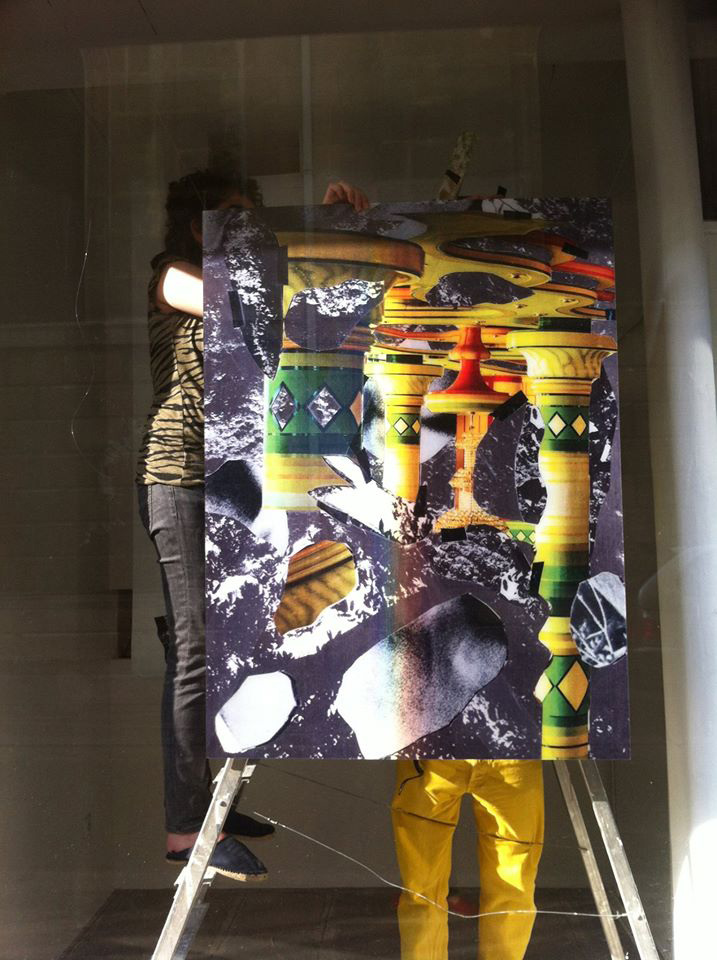
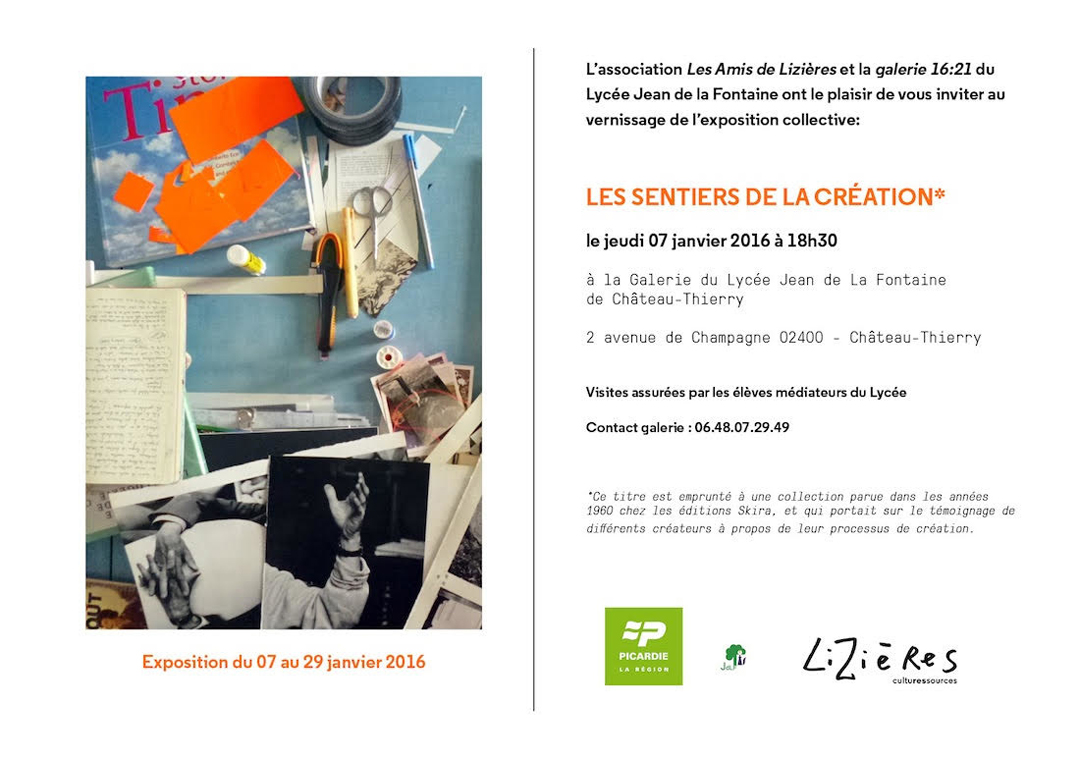
Exposición en el Lycée Jean de La Fontaine
Exhibition at Jean de la Fontaine School